
Oriental Sweets and Mint Tea: Origins, Families and Rituals of Maghreb and Levantine Pastry
In short
Oriental pastry is the art of Mediterranean and Levantine sweets: almonds, honey, orange blossom, sesame and dried fruit, hand-shaped into gazelle horns, baklava, makrout, ghriba or loukoum. Across the Maghreb and the Levant they end a meal, a snack or a celebration, always with a mint tea poured from high. AROM, 44 Rue Espariat in Aix-en-Provence, does not serve them: its Mediterranean table ends the meal differently, with Mamie's Tiramisu, a Mont-Blanc or a Gourmet Coffee.
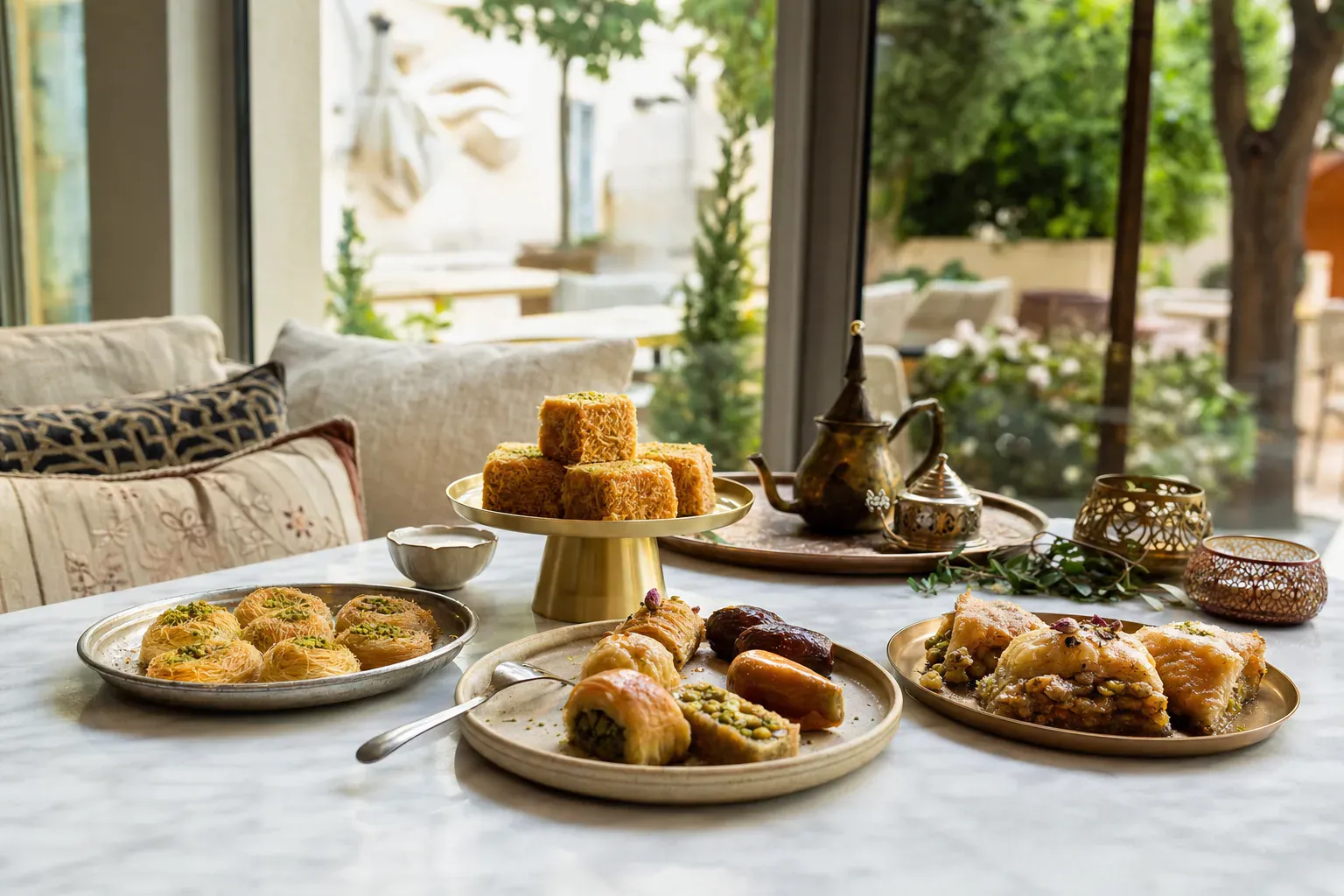
An oriental meal is never truly over until the tray of sweets reaches the table. After the grills, the couscous or the mezze comes the awaited moment of the sweet course: a gazelle horn melting in the mouth, a syrup-glossed baklava, and the scent of orange blossom.
In sun-soaked, Mediterranean Aix-en-Provence, this sweet tradition belongs. This guide is devoted entirely to the sweet side of oriental cuisine: where these pastries come from, what they are made of, why mint tea pairs so well, and when to enjoy them in Aix.
What is oriental pastry?
Oriental pastry gathers the traditional sweets of the Maghreb, the Near and Middle East and the eastern Mediterranean. These are not European-style cakes: think almond paste, worked semolina, paper-thin filo and fragrant syrups.
Its roots are twofold: an Andalusian legacy for the fine almond work of the Maghreb, and an Ottoman one for the syrup-soaked filo of the Levant, such as baklava.
All these families share one idea: small, intense bites, made to be shared and enjoyed slowly with a hot drink.
Honey, almonds, orange blossom, sesame: the aromatic signature
A few ingredients recur in almost every oriental sweet. The almond, blanched into paste or toasted, brings softness and structure.
Honey acts as the noble sugar, poured warm over fried pieces like makrout to give a fragrant glaze.
Orange blossom is the perfumed soul of Maghreb pastry, while rose water leads in the Levant. Sesame and pistachio dress the surfaces; cinnamon and cardamom complete the palette.
The main families of oriental sweets
Oriental pastries fall into four main families, each with its own technique and character.
Gazelle horns & makrout
Hand-shaped pieces: almond-filled crescents and date-filled semolina lozenges dipped in honey.
Baklava & honey pastries
Levantine filo layers filled with pistachio or walnut, baked then soaked in syrup.
Ghriba & shortbread
Round, crumbly biscuits with almond, coconut or sesame and a cracked surface, perfect with tea.
Loukoum & stuffed dates
Sweets to bite: rose or lemon loukoum dusted with sugar, and almond-stuffed dates.
Gazelle horns, makrout, baklava: the trio to know
The gazelle horn is the most elegant: a thin shortcrust wraps orange-blossom almond paste into a crescent, served at Maghreb celebrations.
The makrout is rustic and comforting: a date-filled semolina lozenge, fried then dipped hot in honey.
The baklava comes from the Levant: dozens of buttered filo sheets over crushed pistachios, soaked in syrup after baking, all crisp on top and syrupy below.
The gap between baklava and gazelle horn sums up oriental pastry's two souls: Ottoman syrup-filo versus Andalusian hand-shaped almond.
The art of mint tea: the perfect pairing
Oriental pastry is unthinkable without mint tea. The green gunpowder tea's slight bitterness cuts through the sweetness of honey and almond so the palate never saturates.
The service matters as much as the drink: the tea is poured from high to aerate it and form a light foam, while fresh mint adds a lasting freshness.
Serving tea is a gesture of hospitality, sipped slowly over several glasses, inviting everyone to linger over the sweets.
When to enjoy oriental pastry in Aix-en-Provence?
Oriental sweets suit many moments of the day and the year. Here is when they shine in Aix.
To end an oriental meal
After couscous or grills, a gazelle horn and mint tea close the meal on a light, fragrant note.
As an afternoon snack
A baklava or two with tea turn a mid-afternoon break into a treat in Aix’s pedestrian centre.
During weekend brunch
Oriental sweets give a Mediterranean brunch an original finishing touch.
For festivities and Ramadan
A centrepiece of celebration tables and the breaking of the fast.
As a gourmet gift
An assortment of sweets makes a warm, refined present.
Indulgence, sugar and pleasure: what to know
Oriental pastries are rich in honey, almonds and frying, but they are eaten in small bites: one or two pieces with tea are enough.
Their ingredients have upsides: almonds bring good fats and plant protein, honey replaces refined sugar, and most are naturally alcohol-free.
Balance is key: a sweet to end a meal or a break, best enjoyed slowly with lightly sweetened mint tea.
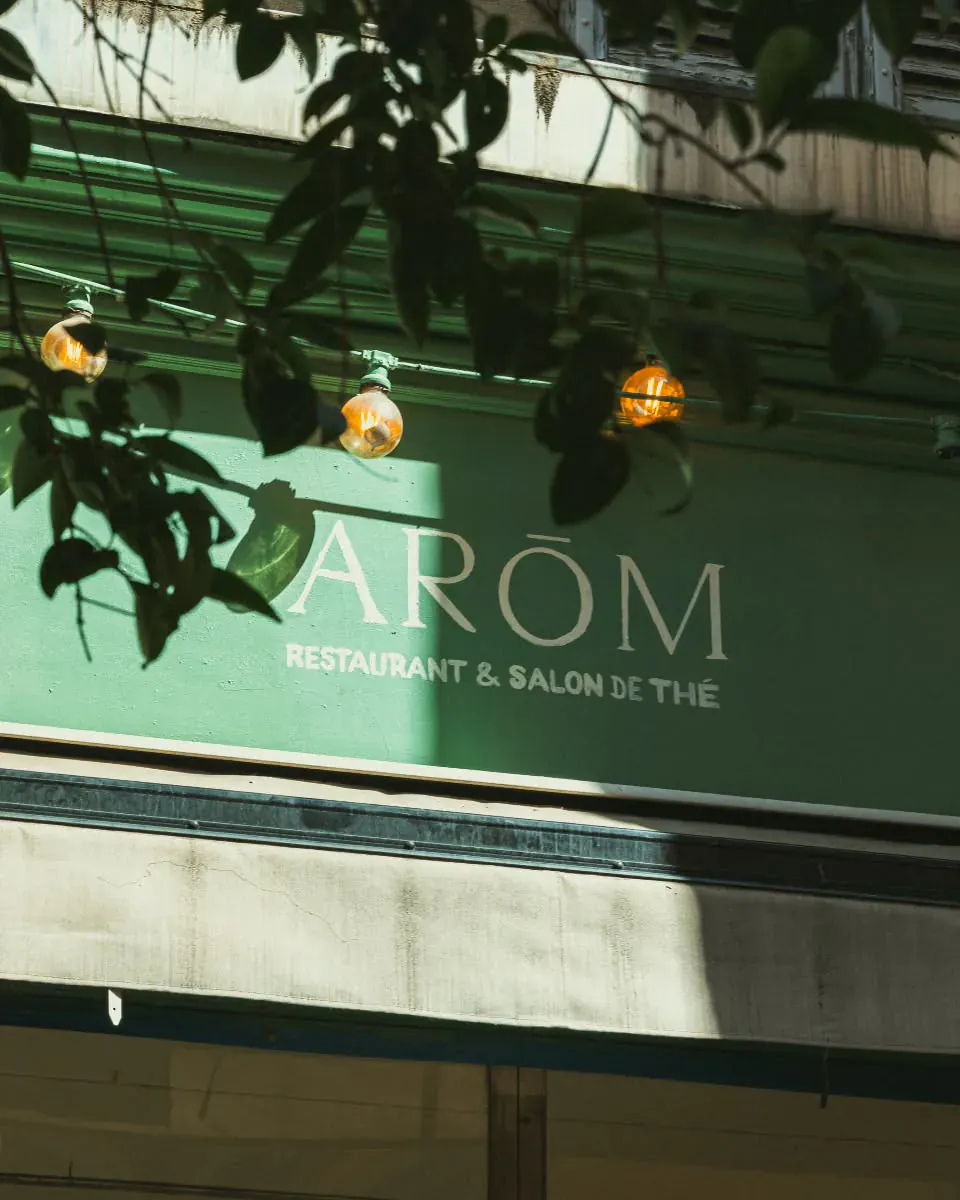
Ending a meal on a sweet note in central Aix-en-Provence
To taste genuine oriental pastries in Aix-en-Provence, your best bet is a specialist pastry shop or caterer, where gazelle horns and baklava are the core trade and are often sold by the piece. AROM, 44 Rue Espariat, has taken another path: its menu is now that of a Mediterranean table, and its desserts draw on French and Italian classics rather than Maghreb or Levantine ones.
The ritual lives on in another form. The Gourmet Coffee (€13) follows the idea of a hot drink served with small sweets, a very French way of stretching out the end of a meal. Lovers of classics will rather pick Mamie's Tiramisu, the Mont-Blanc or the Crème Brûlée (€10 each), unless the Beautiful Profiteroles (€15) win them over.
Steps from Cours Mirabeau and Place des Cardeurs, it is easy to reach on foot after a stroll through old Aix. The street terrace and warm dining room invite you to linger, and AROM also delivers via Delicity across Aix-en-Provence and the Pays d'Aix, seven days a week.
Frequently asked questions about oriental sweets and mint tea
What is the difference between baklava and a gazelle horn?
+
Baklava is a Levantine syrup-soaked filo pastry with pistachio or walnut; the gazelle horn is a Maghreb crescent of shortcrust around orange-blossom almond paste, without syrup. One is crisp and syrupy, the other soft with almond.
Are oriental pastries very caloric?
+
They are rich, made with honey, almonds and frying, but eaten in small bites: one or two with tea are enough. Based on almonds and honey rather than butter and cream, they satisfy without large quantities.
Do oriental pastries contain alcohol?
+
Traditional oriental pastries are overwhelmingly alcohol-free, flavoured with orange blossom, rose water, cinnamon or cardamom and never with liqueurs, which makes them suitable for family and religious celebrations.
Why is mint tea served with oriental sweets?
+
The pairing is balanced: the green tea’s bitterness cuts the sweetness of honey and almond, and fresh mint adds a lasting freshness. Poured from high and sipped slowly, the tea invites lingering over the sweets.
Can you take oriental pastries away in Aix-en-Provence?
+
Yes. Specialist shops and caterers in town sell their sweets by the piece or as assortments, which makes a lovely gourmet gift. For a journey or a dinner at friends, dry pieces such as gazelle horns or ghriba travel better than syrup-soaked filo, which tends to stick and soften.
Which oriental sweets should beginners try first?
+
Start with the classic trio: a gazelle horn for the almond, a makrout for the date and honey, and a baklava for the crisp-syrupy contrast, all with a mint tea.
Does AROM offer an equivalent of the tea-and-sweets ritual?
+
Not in its oriental form: AROM, 44 Rue Espariat, serves neither oriental pastries nor mint tea. The closest moment on its menu is the Gourmet Coffee (€13), a coffee served with small sweets, alongside Mamie’s Tiramisu, the Mont-Blanc and the Crème Brûlée, to enjoy indoors or on the terrace near Cours Mirabeau.
Fancy ending your meal on a sweet note on Rue Espariat?
AROM welcomes you 7 days a week at 44 Rue Espariat, Aix-en-Provence. Shared starters, southern dishes and desserts such as Mamie's Tiramisu or the Mont-Blanc, indoors, on the terrace or via Delicity delivery.
Going further
Keep reading with these pages about AROM and Mediterranean cooking:
AROM is above all a bon restaurant aix en provence: a Mediterranean table in the historic centre, where the meal ends with a tiramisu, a Mont-Blanc or a gourmet coffee.
To find gazelle horns, baklava and makrout in town, read our guide to oriental pastries in Aix-en-Provence.