
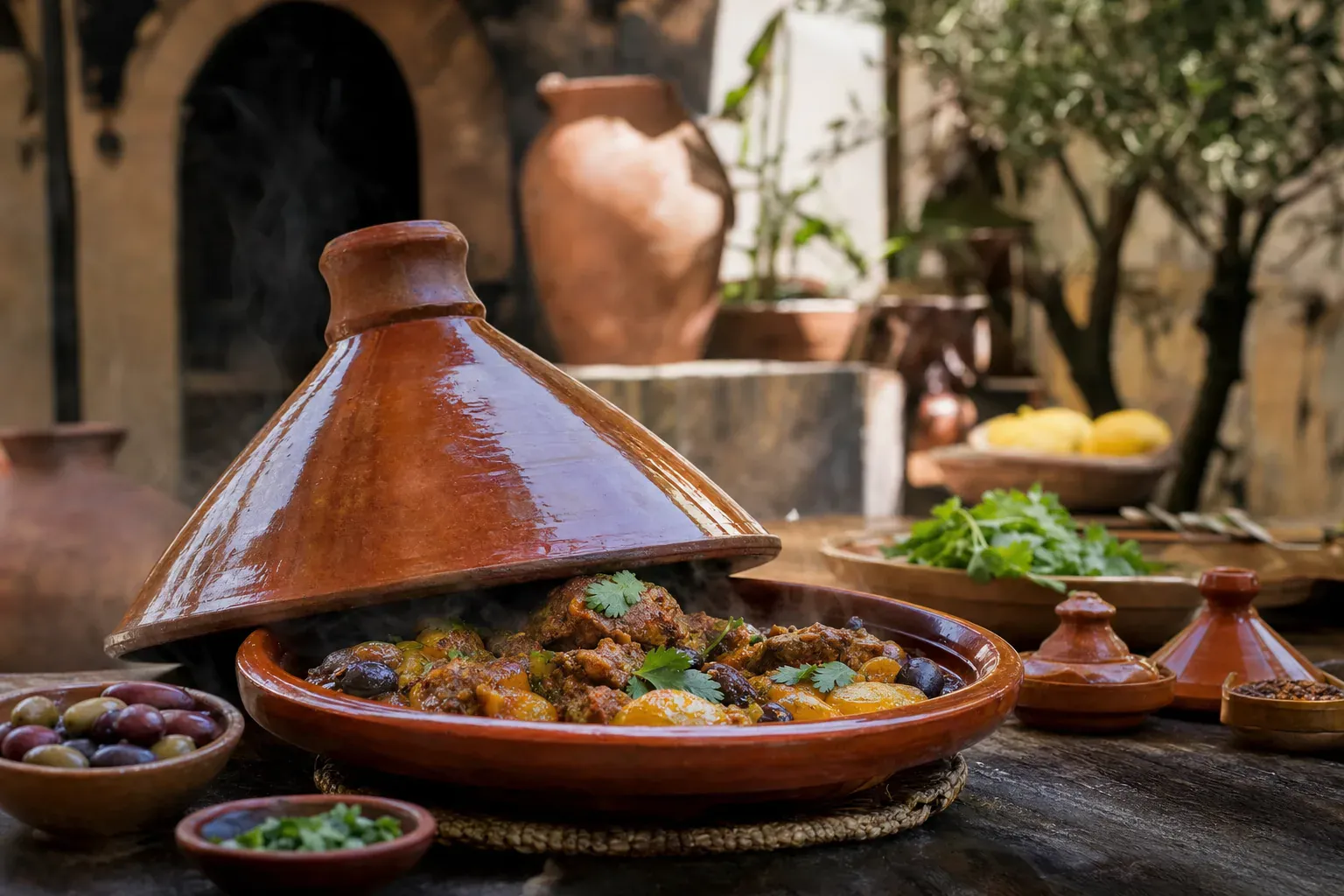
The history of tajine: Berber origins, cooking techniques and variations of an iconic slow-cooked dish
In short
Tajine is both a slow-cooked dish and the conical clay pot it cooks in. Born among the Berber peoples of North Africa, it spread across the Maghreb and became a symbol of Moroccan cuisine. Steam rises into the cone, condenses and falls back onto the food, which confits in its own juices. Lamb with prunes, chicken with preserved lemon, fish chermoula or vegetables: all share the same secret, time and spices.

Tajine, more than a dish: a ritual of sun-kissed cuisine
First comes the scent of cinnamon and ginger, then the gesture of lifting the lid at the centre of the table. That is when tajine becomes a shared ritual.
This article traces its Berber origins, its clay pot, its slow cooking, its variations and its spices.
The origins of tajine: from Berber roots to Maghreb tables
Like couscous, tajine is first a legacy of the Amazigh (Berber) peoples of North Africa.
Etymology and meaning
The word comes from Maghrebi Arabic ṭājin, often linked to the Greek tēganon (clay pan). It names both the pot and the dish.
Spread across Morocco, Algeria and Tunisia
Arab, Andalusian and Ottoman influences added dried fruit, honey and spices. In Tunisia, a “tajine” is even a baked egg dish.
Place tajine among other Moroccan classics in our guide to Moroccan cuisine.
Dish or pot? Understanding the clay tajine
A shallow base and a tall cone: nothing about its shape is decorative.
The cone and steam cooking
Steam rises, condenses on the cooler cone and falls back onto the food, which cooks in its own juices.
Tajine vs Marrakech tanjia
The tanjia is an amphora-shaped jar slow-cooked overnight in the ashes of a hammam furnace.
Materials and seasoning
Soak, oil and heat the clay slowly before first use, and avoid thermal shocks.
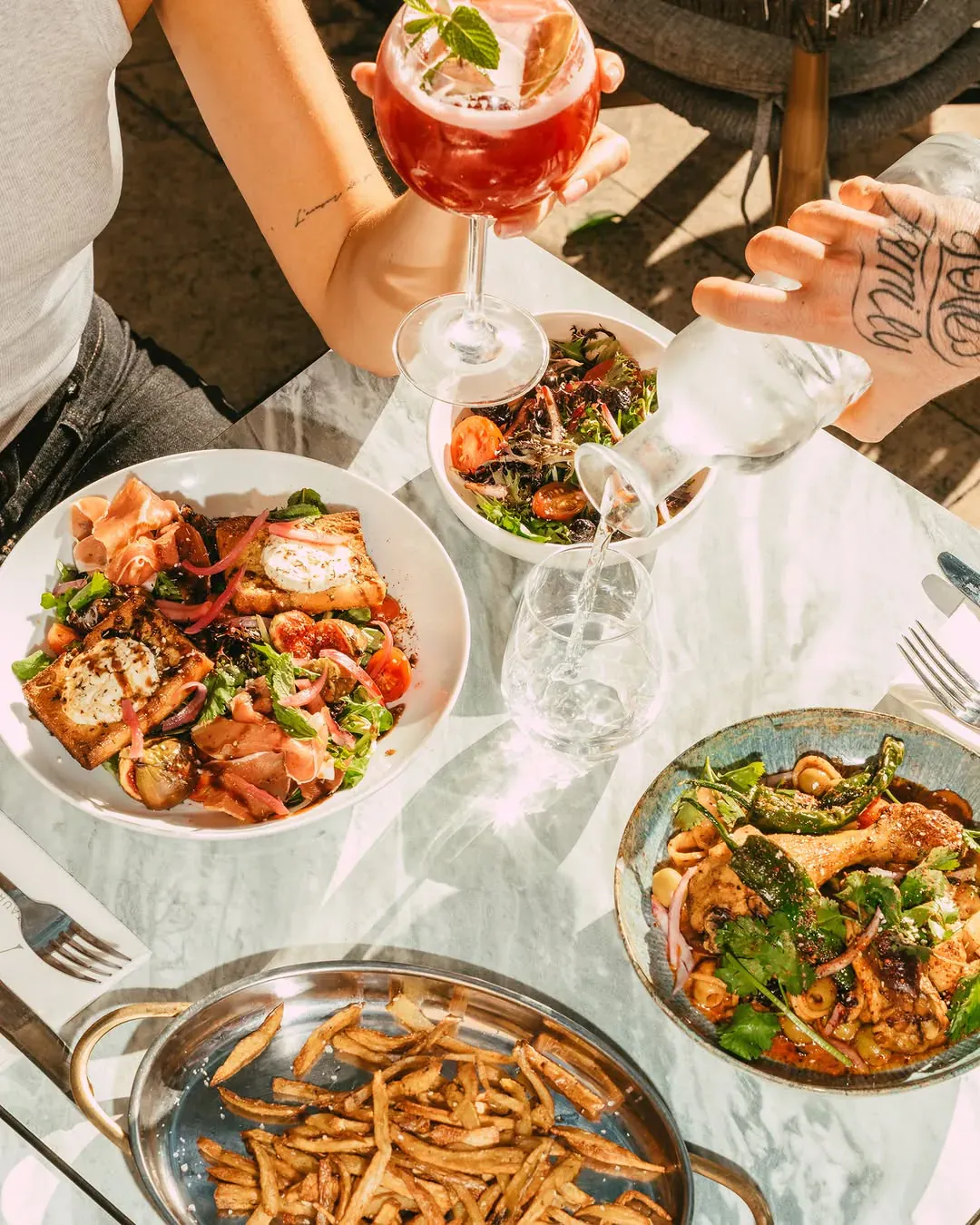
Slow cooking, the secret of deep flavours
Why time changes everything
Low heat turns collagen into gelatine: meat falls apart and the sauce thickens naturally. At AROM, our lamb tajine simmers for about four hours.
The role of broth and steam
Only a little liquid is added; onions melt into the base and steam does the rest. Keep the lid closed.
« A good tajine is not watched, it is awaited. »
The main families of tajines
Four signatures dominate Maghreb tables.
Lamb with prunes and almonds
A festive sweet-and-savoury dish with cinnamon, ginger and ras el hanout.
Chicken with preserved lemon and olives
A family classic, golden with saffron and bright with lemon.
Fish chermoula
Fish marinated in herbs, garlic and cumin, cooked on vegetables.
Vegetable tajine
A vegetarian pyramid of seasonal vegetables and chickpeas.
Compare with its cousin in our history of traditional couscous.
The spices behind a great tajine
Spices build depth rather than heat; balance is everything.
Learn more in our guide to oriental spices.
The spice merchant’s signature blend.
The gentle warmth behind most tajines.
Golden colour and honeyed scent.
Earthy, key to fish chermoula.
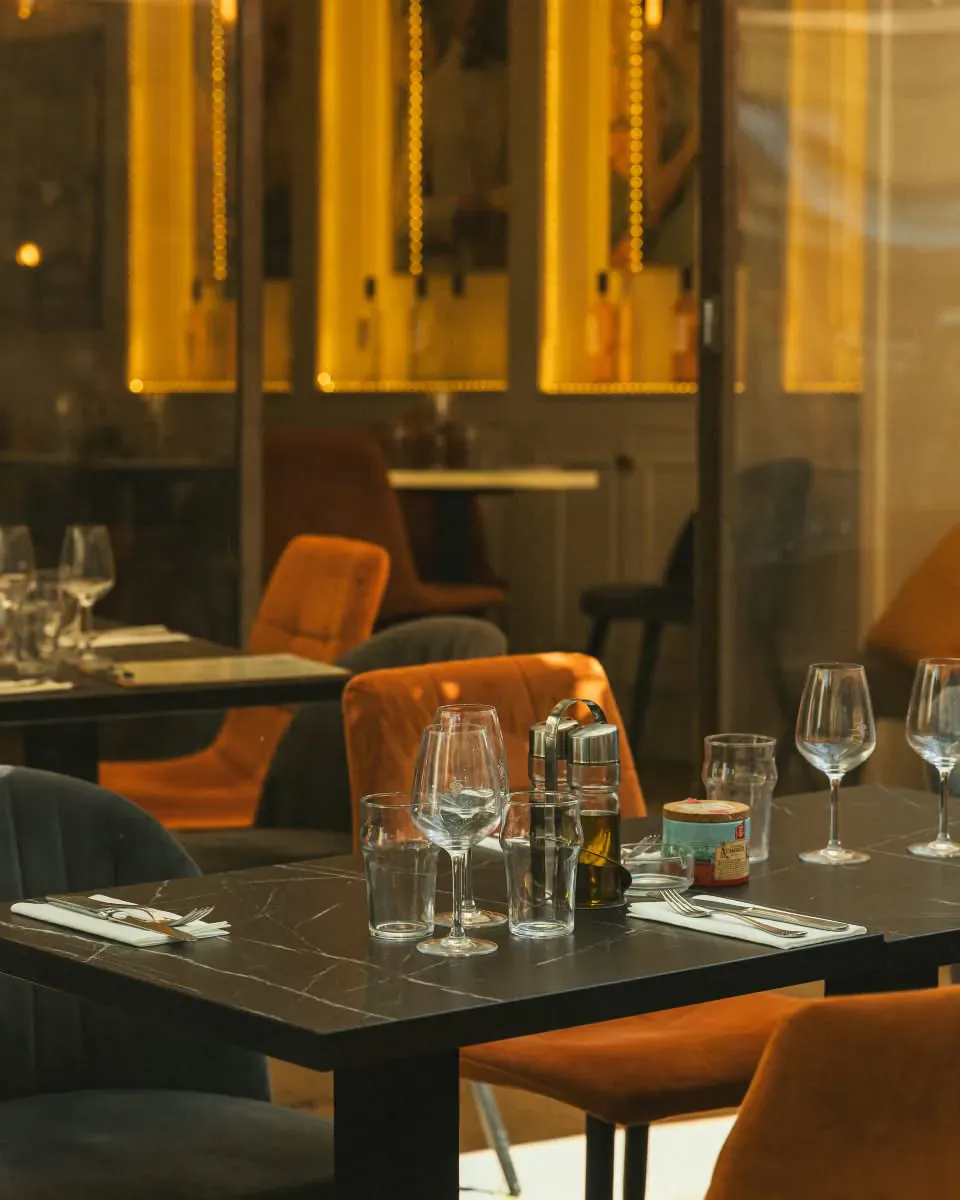
Tajine at home or at the restaurant
A home tajine is easy with a seasoned pot and patience; a restaurant adds consistency and mastered timing.
It is eaten with homemade bread and often followed by mint tea.
- Homemade bread
- Mint tea
- Shared from the centre
Enjoying a real slow-cooked tajine in Aix-en-Provence
At 44 Rue Espariat, AROM serves a homemade lamb tajine with prunes and almonds, slow-cooked for about four hours.
Open 7 days a week, with continuous service on weekends from 10am to 11:30pm.
Discover our Mediterranean and oriental table in Aix.
Frequently asked questions about tajine
Which meat for a tajine?
Slow-cooking cuts like lamb shoulder, chicken thighs or shank; firm fish for seafood versions.
How long does a tajine cook?
About 1h for vegetables or chicken and 2 to 4 hours for lamb.
Can you make tajine without a clay pot?
Yes, a heavy cast-iron pot works well with little liquid.
Tajine vs couscous?
Tajine is a steam-braised stew in clay; couscous is steamed semolina over broth.
Where does tajine come from?
From the Berber peoples of North Africa.
Is tajine spicy?
Fragrant rather than hot; chilli is served on the side.
Further reading
Continue your journey with our other guides.